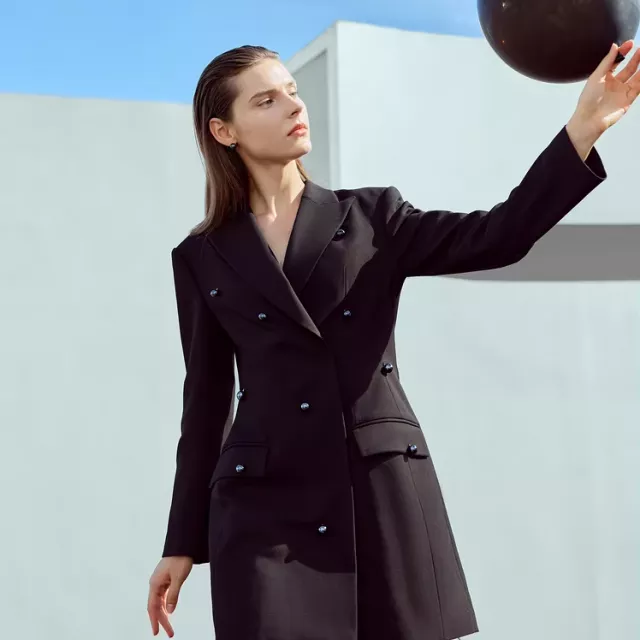
A long, tailored winter blazer brings structure and warmth without sacrificing polish. The right cut can sharpen everyday outfits, elevate workwear, and layer comfortably through colder months—especially when fabric weight, lining, and length are chosen with winter wear in mind.
What Makes a Long Tailored Winter Blazer Different
- Longline length adds coverage and a streamlined silhouette, often sitting mid-thigh to knee depending on height.
- Tailoring details—defined shoulders, shaped waist, and structured lapels—create a refined look even over thicker layers.
- Winter-ready builds typically use heavier outer fabric, a smoother lining for layering, and construction that holds its shape in cold weather.
- Works as a hybrid between a blazer and a light coat for transitional winter days or indoor-to-outdoor wear.
Compared with a standard blazer, the longer hem changes proportions in a flattering way: it visually lengthens the torso line and often makes outfits look more “finished,” even when you’re wearing simple basics underneath. The added length also helps block drafts around the hips and upper thighs—an area that can feel exposed in cropped or regular blazers during winter.
Fabric, Lining, and Warmth
- Look for medium-to-heavy fabrics that resist wrinkling and keep a crisp drape; dense weaves tend to block wind better than loose knits.
- Lined interiors make layering easier and reduce friction over sweaters; partial lining can feel lighter but may catch on chunky knits.
- If warmth is the priority, consider room for a thin insulated layer underneath rather than sizing up excessively (which can distort the shoulder fit).
- For comfort, check for breathable materials if the blazer will be worn indoors for long stretches.
Warmth starts with fiber and fabric construction. In general, denser textiles trap heat and reduce wind penetration; fiber properties and fabric structure also influence how a garment drapes and recovers after wear. For a helpful overview of how textiles behave across different uses, see Encyclopaedia Britannica’s textile basics.
Lining matters just as much as the outer fabric. A smooth lining helps the blazer glide over knitwear and prevents bunching at the elbows or upper back. If a blazer is unlined or only partially lined, it can still work for milder winters or primarily indoor wear—but it may cling to sweaters and feel less “sealed” against cold air.
Fit and Tailoring Details to Check
- Shoulders: seams should align close to the shoulder bone; too wide looks boxy, too narrow restricts movement.
- Chest and lapels: the front should lie flat when buttoned; gaping often indicates the bust or torso is too tight.
- Waist shaping: light contouring flatters without limiting layers; strong suppression can feel restrictive over sweaters.
- Sleeve length: aim for wrist-bone coverage; consider layering thickness when checking arm mobility.
- Vent and hem: a back vent improves stride and sitting comfort, especially for longer lengths.
A winter blazer should fit cleanly without forcing the fabric to pull or twist when you move. When trying one on, lift your arms as if you’re reaching for a shelf and then cross them in front of your body. If the upper sleeve feels tight or the back strains across the shoulder blades, you’ll be uncomfortable once you add a sweater. The goal is ease through the chest and upper back while keeping the shoulder line tidy—because shoulders are the hardest area to alter.
How to Choose the Right One for Winter Wear
Quick Winter Blazer Selection Guide
| Priority |
What to Look For |
Best For |
| Warmth |
Heavier fabric, full lining, room for a thin layer |
Cold commutes, outdoor events |
| Polish |
Crisp lapels, defined shoulders, clean front closure |
Office, dinners, smart casual |
| Everyday comfort |
Softer structure, easier arm mobility, vented hem |
All-day wear, travel, errands |
| Versatility |
Neutral color, classic single-breasted shape |
Capsule wardrobes |
Outfit Ideas for Cold-Weather Styling
Care and Storage for Long Tailored Blazers
Winter blazers see more friction from scarves, bags, and outer layers, so small habits add up: brush the surface after wears, air it out before putting it back in the closet, and treat salt or water spotting quickly. For label terms and general guidance on garment care instructions, the Federal Trade Commission’s care-label resource is a useful reference.
FAQ
Can a long tailored blazer be worn as outerwear in winter?
Yes—if the winter is mild or you’re mostly going from indoors to outdoors, a long tailored blazer can work like light outerwear. In freezing temperatures or strong wind, it’s best layered with a warmer coat or worn with insulating layers underneath, especially if the blazer isn’t heavy or fully lined.
How should a long tailored blazer fit over sweaters?
Start with shoulder fit: the seam should sit close to your shoulder bone while allowing comfortable arm movement. Make sure the front closes without pulling or gaping, and aim for enough ease for a fine or midweight knit without sizing up so much that the blazer loses its clean structure.
What length is most flattering for a long blazer?
Mid-thigh is broadly flattering and practical because it adds coverage without overwhelming most frames. Taller wearers can go longer for a dramatic line, while petite wearers often prefer a slightly shorter longline; for knee-adjacent hems, a vent helps maintain an easy stride and balanced proportions.
Recommended for you










Leave a comment