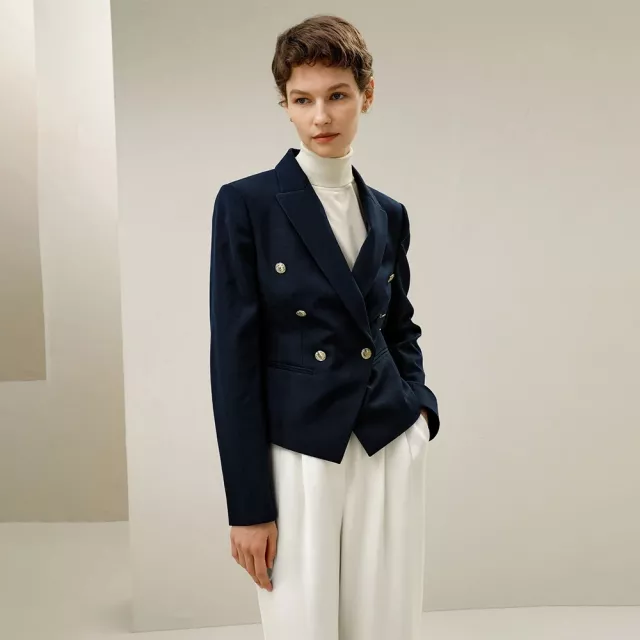
A sharp, tailored blazer can carry an outfit from weekday meetings to evening plans. This slim-fit, double-breasted wool blazer with a smooth silk lining is designed to look structured on the outside while feeling comfortable and polished on the inside. With clean lines, a confident front closure, and a refined hand-feel, it’s the kind of piece that can anchor a capsule wardrobe and make simple outfits look intentional.
What Makes This Blazer Stand Out
- Double-breasted front creates a confident, structured silhouette with a classic tailoring mindset.
- Slim fit emphasizes clean lines and a tailored profile that reads modern and sharp.
- Wool outer layer offers warmth and a refined texture that looks elevated in daylight and evening lighting.
- Silk lining helps the blazer glide over tops and reduces friction at the sleeves—especially helpful when layering.
- Versatile styling for workwear, smart casual outfits, and occasion dressing without needing a full outfit change.
Fabric Feel: Wool Outside, Silk Inside
This blazer’s fabric pairing is a big part of what makes it feel “finished.” Wool is widely valued for temperature regulation and a naturally polished appearance, making it a go-to for tailored outer layers. In cooler months, wool adds warmth without the visual bulk of heavy layering, so the silhouette stays sleek.
Inside, a silk lining brings a smooth, low-friction finish that can make a noticeable difference during long wear. It helps prevent bunching over knitwear or blouses, and it can reduce that catch-and-pull feeling at the elbows and forearms when you move through your day. The result is a blazer that keeps its drape and looks crisp even when worn over different textures.
For ongoing care guidance, consult authoritative resources like Woolmark’s wool care tips and general best practices for delicate linings such as The Textile Institute.
Fit and Structure: Slim Fit with Double-Breasted Balance
Slim fit typically sits closer through the waist and torso for a cleaner outline. That close-to-the-body cut can look especially intentional with a double-breasted front, because the overlapping panels create visual strength across the center line and can enhance the waist-to-shoulder ratio.
The key is comfort at the closure. A double-breasted blazer should button smoothly without pulling at the bust or creating stress lines that radiate from the buttons. If the front feels like it’s fighting to stay closed, the fit will look tense instead of tailored.
Sleeves matter just as much as the torso. When the arms are slim, the lining becomes more than a luxury detail—silk helps sleeves slide on easily over long-sleeve tops and makes it easier to move without the fabric grabbing at your base layer.
Outfit Ideas for Different Occasions
- Workday tailoring: Pair it with straight-leg trousers, a crisp blouse, and low heels for a clean, meeting-ready look.
- Modern smart casual: Style with dark denim, a fitted tee, and loafers. Keep the blazer slightly open for a relaxed but put-together line.
- Evening polish: Wear it over a slip dress or a silky cami with a midi skirt. The double-breasted shape adds structure to softer pieces.
- Layering approach: Add a thin knit turtleneck underneath on colder days; it keeps warmth high while maintaining the slim profile.
- Accessories that complement: A structured tote, minimal jewelry, and a belt bag worn crossbody can give tailored styling a contemporary edge.
How to Choose the Right Size and Look
When a blazer is slim and double-breasted, fit checkpoints become simpler but more important. Start with the shoulders, then confirm the closure, and only after that focus on the waist and styling preferences.
- Prioritize shoulder fit: Seams should align near the edge of the shoulder without overhang or rippling.
- Check button closure: When fastened, the front should lie flat without gaping or pulling.
- Confirm sleeve length: Aim for a slight reveal of shirt cuff (about 0.25–0.5 inch) for a tailored finish.
- Consider intended layering: If you’ll wear thicker knits, you may need extra ease through the arms and chest.
- Choose proportions: A slim fit looks most balanced with mid- to high-rise trousers or skirts that define the waist.
- Decide on styling preference: Fully buttoned reads sharp and structured; worn open creates a longer, leaner line.
Quick Fit Check Guide
| Area |
What to Look For |
Common Fix |
| Shoulders |
Seams sit at the shoulder edge; no rippling |
Try a different size; avoid heavy shoulder alterations |
| Bust/Buttons |
No gaping; fabric lies smooth when buttoned |
Size up if pulling; consider open-front styling |
| Waist |
Defined shape without tightness |
Tailoring can refine waist if shoulders fit well |
| Sleeves |
Comfort when bending arms; smooth over layers |
Silk lining helps; adjust size if tight in bicep |
| Length |
Hits a flattering point for your proportions |
Pair with higher-rise bottoms if blazer runs longer |
Care and Longevity Tips
Details at a Glance
FAQ
Is a double-breasted blazer flattering on a slim-fit cut?
Yes—double-breasted fronts add structure and definition, which can look especially sharp on a slim-fit blazer. The key is correct fit at the shoulders and a closure that buttons without pulling at the bust or creating stress lines.
What is the benefit of a silk lining in a wool blazer?
A silk lining makes layering smoother, helps the blazer slide on and off more easily at the sleeves, and reduces friction and bunching over blouses or knitwear. It also supports a cleaner drape, so the blazer looks polished across different outfit textures.
How should a slim-fit blazer fit through the shoulders and arms?
The shoulder seams should sit at the shoulder edge without overhang, and you should be able to move your arms comfortably without tightness in the bicep when bending. If you plan to layer, prioritize comfort in the arms and chest and use tailoring mainly to refine the waist.
Recommended for you










Leave a comment