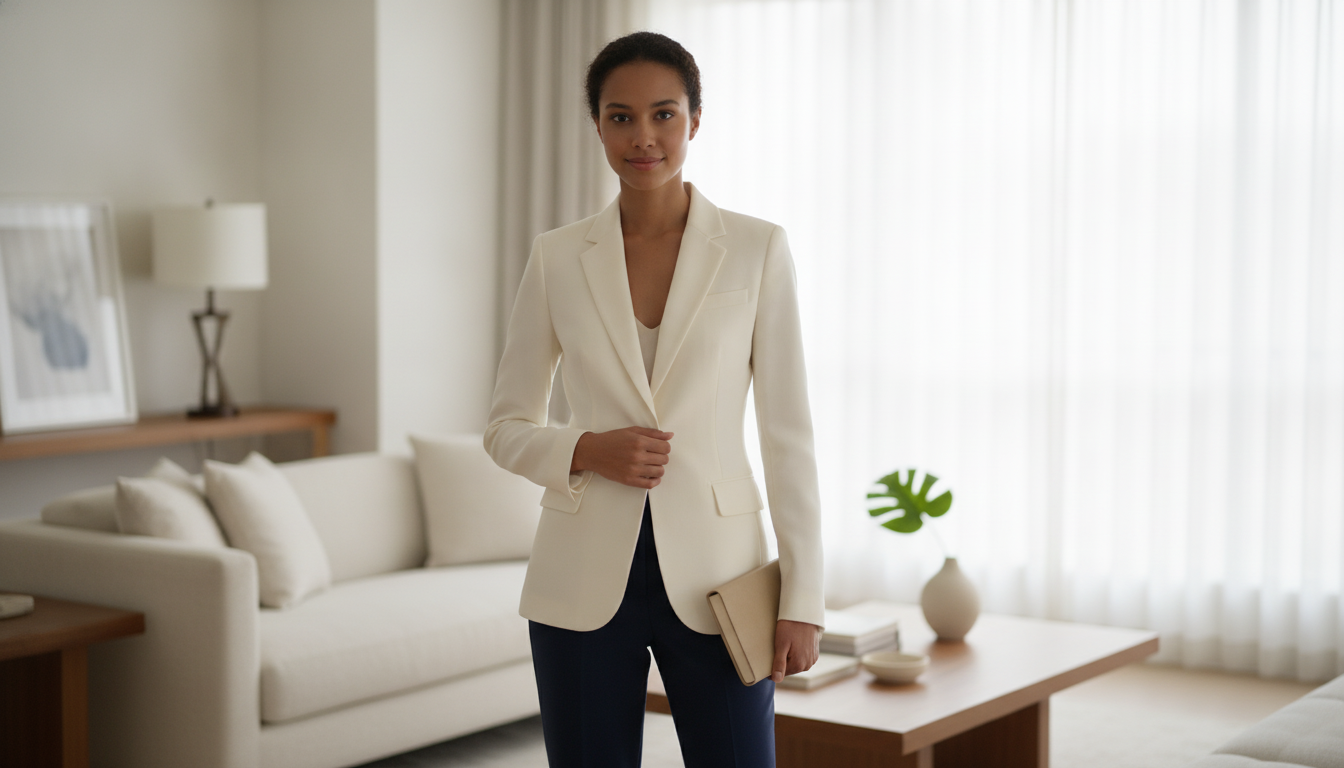
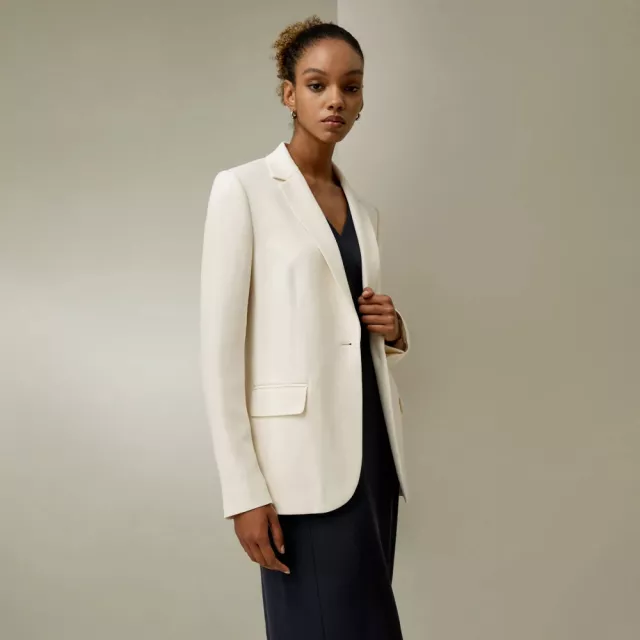
A polished blazer can do more than “finish” an outfit—it can define proportion, sharpen a silhouette, and still feel effortless to wear. A sleek blazer made in heavy silk crepe stands out for its refined drape and smooth surface, while a cinched waist creates shape without the rigidity of overly structured tailoring. Add half-lining, and the result is a piece that layers more comfortably, travels better, and transitions from day to evening with minimal styling changes. For more guidance, see – Norell: Dean of American Fashion.
At a Glance: What Makes This Blazer Distinct
- Heavy silk crepe creates a smooth, substantial drape that reads refined rather than stiff.
- Cinched waist detail shapes the torso for a tailored look without relying solely on darts.
- Half-lining supports structure while keeping the interior lighter and more breathable than fully lined options.
- Sleek profile works as a topper over dresses, trousers, denim, and skirts with minimal bulk.
- A strong choice for day-to-night wear when a sharp silhouette is needed without heavy padding.
Quick Details to Compare
| Feature |
Why it matters |
What to check before buying |
| Fabric: heavy silk crepe |
Adds weight, drape, and a clean surface that elevates outfits |
Confirm blend vs. 100% silk, thickness, and whether it wrinkles easily |
| Shape: cinched waist |
Creates definition and a longer, leaner line |
Look for adjustable elements (belt/tabs) and where the cinch sits (natural waist vs. high hip) |
| Construction: half-lining |
Improves comfort and movement; can reduce heat retention |
Check sleeve lining and seam finishing on unlined areas |
| Shoulder structure |
Determines how sharp the blazer reads and how it layers |
Assess padding level and shoulder seam placement |
| Closures |
Affects versatility and fit across the bust/waist |
Verify button count, stance, and whether it pulls when closed |
Fabric Focus: The Feel and Drape of Heavy Silk Crepe
Silk has a long history as a luxury fiber thanks to its natural luster, strength, and smooth feel (see Encyclopaedia Britannica’s overview of silk). In crepe form, silk develops a softly textured hand and a subtle, elegant “bounce” rather than a slippery shine. When the crepe is heavier, it gains enough body to hold a blazer silhouette without feeling stiff or overly formal. For further reading, see Frances Folsom Cleveland’s White House Wardrobe.
- Silk crepe is known for fluid movement; a heavier crepe adds body so the blazer keeps its shape.
- The weight helps the front panels fall cleanly, reducing fluttering and making the cinched waist look intentional rather than forced.
- A sleek crepe surface pairs well with both matte and shine—think wool trousers, satin skirts, or crisp cotton shirting.
- In warmer climates or heated indoor settings, silk can feel comfortable against the skin; layering choice matters more with half-lining.
- Color depth often appears richer on silk-based fabrics, giving neutrals a more elevated finish.
If fabric choice is a priority, it also helps to look at broader material guidance from fashion industry resources like CFDA Material Insights, especially when comparing pure silk to blends that may change drape, wrinkle resistance, or durability.
Design Details: Cinched Waist and Half-Lining
Two elements define this blazer’s personality: the waist emphasis and the lighter interior construction. Together, they create a tailored look that doesn’t feel heavy.
- A cinched waist can be achieved through shaping seams, internal tabs, or a self-belt; the best versions define the waist without creating bunching.
- Half-lining typically lines the upper body and sometimes sleeves, leaving lower panels lighter for movement and reduced bulk.
- Half-lined construction can make the blazer more packable while maintaining a polished front when worn open.
- Look for clean finishing on unlined sections (bound seams, tidy overlock, or well-pressed seam allowances) for a luxury feel.
- If the blazer will be worn frequently closed, prioritize smooth lining at the sleeves and upper back for easier layering over knits and shirts.
Small construction choices matter: a smooth sleeve lining can prevent drag over a fitted knit, while neat seam finishing keeps the inside looking intentional—especially important when the lining stops halfway.
Fit and Proportion: Getting the Sleek Look Right
A sleek blazer is less about being tight and more about being precise. The goal is clean lines from shoulder to hem, with waist definition that reads tailored—not strained.
How to Choose a Similar Blazer for Your Wardrobe
Styling Ideas: From Office Sharp to Evening Minimal
Care and Longevity: Keeping Silk Crepe Looking Crisp
FAQ
What does half-lining mean in a blazer?
Half-lining means only part of the blazer’s interior is lined—often the upper body and sometimes the sleeves—while other areas are left unlined. This reduces bulk and can improve breathability while still supporting structure where it matters most.
Is heavy silk crepe suitable for year-round wear?
Heavy silk crepe can work across seasons because it provides structure without feeling rigid. Year-round comfort depends on the lining, how you layer underneath, and your climate—half-lining often makes the blazer more adaptable indoors and during transitional weather.
How should a cinched-waist blazer fit when buttoned?
It should close smoothly without pulling at the bust or forming horizontal strain lines across the front. The waist should feel defined but not restrictive, with enough mobility to move your arms comfortably and sit without the buttons gaping.
Recommended for you









Leave a comment