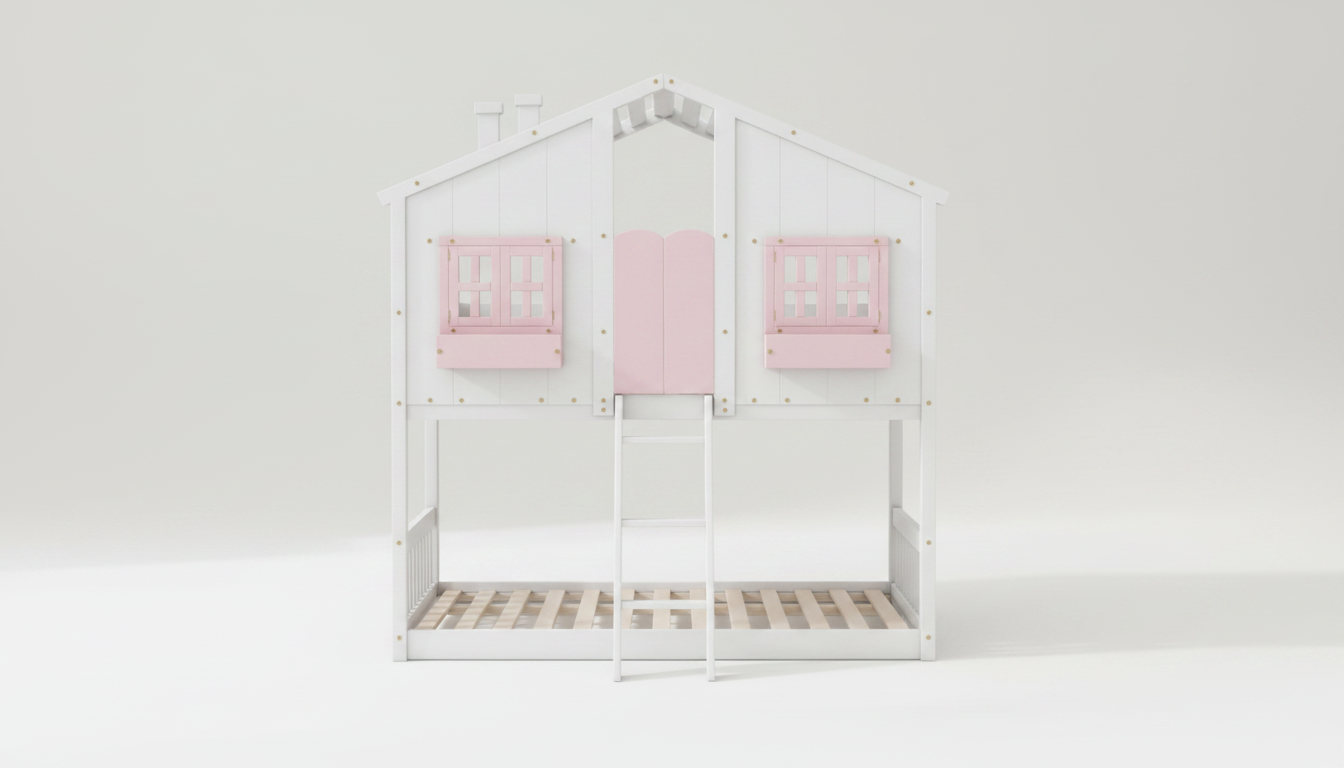
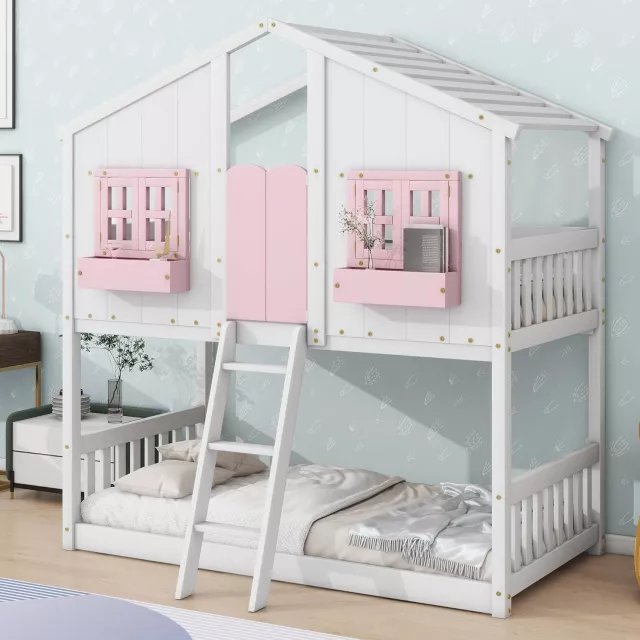
A house-style twin-over-twin bunk bed turns shared sleeping space into a cozy play-and-rest zone, complete with a roofline silhouette, window cutouts, and a built-in slide. With full-length guardrails and a space-saving stacked layout, it’s designed to support everyday routines while adding a fun centerpiece to a kids’ room. The twin-over-twin format also keeps shopping simple: both beds use the same mattress size, so replacements and sheet sets are easy to match as kids grow.
What Makes This House Bunk Bed Stand Out
- Twin-over-twin layout: Helps maximize floor space while keeping both beds the same, easy-to-shop-for size.
- House-frame design: A roof-and-window silhouette adds personality without forcing a bold theme—neutral bedding still looks cohesive.
- Built-in slide: Adds an active, kid-friendly way to get down from the top bunk (use under supervision and with clear landing space).
- Safety guardrails: Intended to provide added protection for the upper bunk during sleep and movement.
Design Details: Roof, Windows, and Slide
The “house” shape is more than decoration—it changes how the bed feels in the room. The roofline creates a defined nook that can make the upper bunk feel like a mini hideaway, while window cutouts keep the structure from looking like a solid block in smaller spaces.
- Roofline styling: The frame can be dressed up with string lights (kept out of reach), fabric canopies, or seasonal bunting for a personalized playhouse vibe.
- Window cutouts: These add visual openness, helping the bed feel lighter and less bulky.
- Slide placement: Plan based on room flow. Leave a clear landing zone and avoid aiming the slide exit at doors, dressers, or sharp corners.
- Soft landing: A rug or foam mat near the slide exit can reduce slips and soften landings—especially helpful for early-morning climbs down.
For day-to-day practicality, consider how kids will use the space when they’re not sleeping. A play corner, book bin, or small table works best when there’s a predictable pathway around the slide and ladder, so the room stays navigable even when toys migrate.
Safety Features and Everyday Use
Bunk beds are a big upgrade in shared rooms, but they work best when paired with clear household rules and a smart layout. For general safety guidance and recall information, it’s worth reviewing resources from the U.S. Consumer Product Safety Commission (CPSC) and the bunk bed standard ASTM F1427.
- Upper-bunk guardrails: Confirm rails run along the open side(s) and are used consistently. Avoid thick toppers that reduce effective rail height.
- Access and movement: Teach kids to face the ladder/steps, keep hands free, and avoid roughhousing on the top bunk.
- Slide habits: One child at a time, seated feet-first, and no jumping from the slide exit.
- Room setup: Keep ceiling fans, shelves, and hanging cords away from the upper bunk area; maintain a clear path around the bed for nighttime use.
- Recommended users: Follow age guidance commonly used for bunk beds—many safety bodies advise that children under 6 should not sleep on the top bunk. Additional tips are available via HealthyChildren.org (AAP).
Practical household habits matter as much as the bed’s features. Make a “no backpacks on the ladder” rule, keep a nightlight near the pathway, and store frequently used items (water bottle, favorite book, stuffed animal) within reach so kids aren’t tempted to climb down in the dark.
Quick Reference: Key Specs to Check Before Buying
- Bed size: Twin on top and twin on bottom—plan for two twin mattresses.
- Room fit: Confirm overall height (for ceiling clearance), total footprint (including slide), and clearance for nearby drawers/doors.
- Mattress fit: Verify the manufacturer’s recommended mattress thickness for the top bunk to keep guardrails effective.
- Weight limits: Check posted limits for each bunk and for slide use if specified.
- Assembly needs: Ensure access to the room, adequate assembly space, and time for tightening/leveling.
At-a-Glance Checklist
| Item to confirm |
Why it matters |
What to look for |
| Ceiling clearance |
Prevents head bumps and improves airflow |
Enough space above the top bunk for sitting up comfortably |
| Slide landing space |
Reduces trips and collisions |
Clear floor area in front of the slide exit |
| Guardrail height with mattress |
Helps reduce fall risk |
Mattress thickness within the maker’s guidance |
| Top-bunk age suitability |
Matches typical safety guidance |
Top bunk reserved for older children (often 6+) |
| Tightening schedule |
Keeps frame stable over time |
Re-check fasteners after initial use and periodically |
How to Choose the Right House Bunk Bed for a Shared Room
Because a slide changes the footprint, choosing the right model starts with measuring how the bed will be used, not just where it will sit. A good fit should feel easy to live with—no awkward squeeze points, no blocked drawers, and no risky pinch zones in the traffic path.
Assembly, Care, and Long-Term Durability
FAQ
Is the slide removable or repositionable?
That depends on the model’s pre-drilled mounting points and how the slide brackets are designed. Check the installation options before assembly and plan the room layout around the placements the manufacturer permits.
What mattress thickness works best for the top bunk?
Use the manufacturer’s maximum thickness guidance so the guardrails maintain effective height above the mattress surface. Extra-thick mattresses or added toppers can reduce the protective benefit of the rails.
At what age can a child sleep on the top bunk?
Common safety guidance advises that children under 6 should not sleep on the upper bunk. Regardless of age, consistent rules for climbing and one-at-a-time slide use help keep everyday routines safer.
Recommended for you









Leave a comment