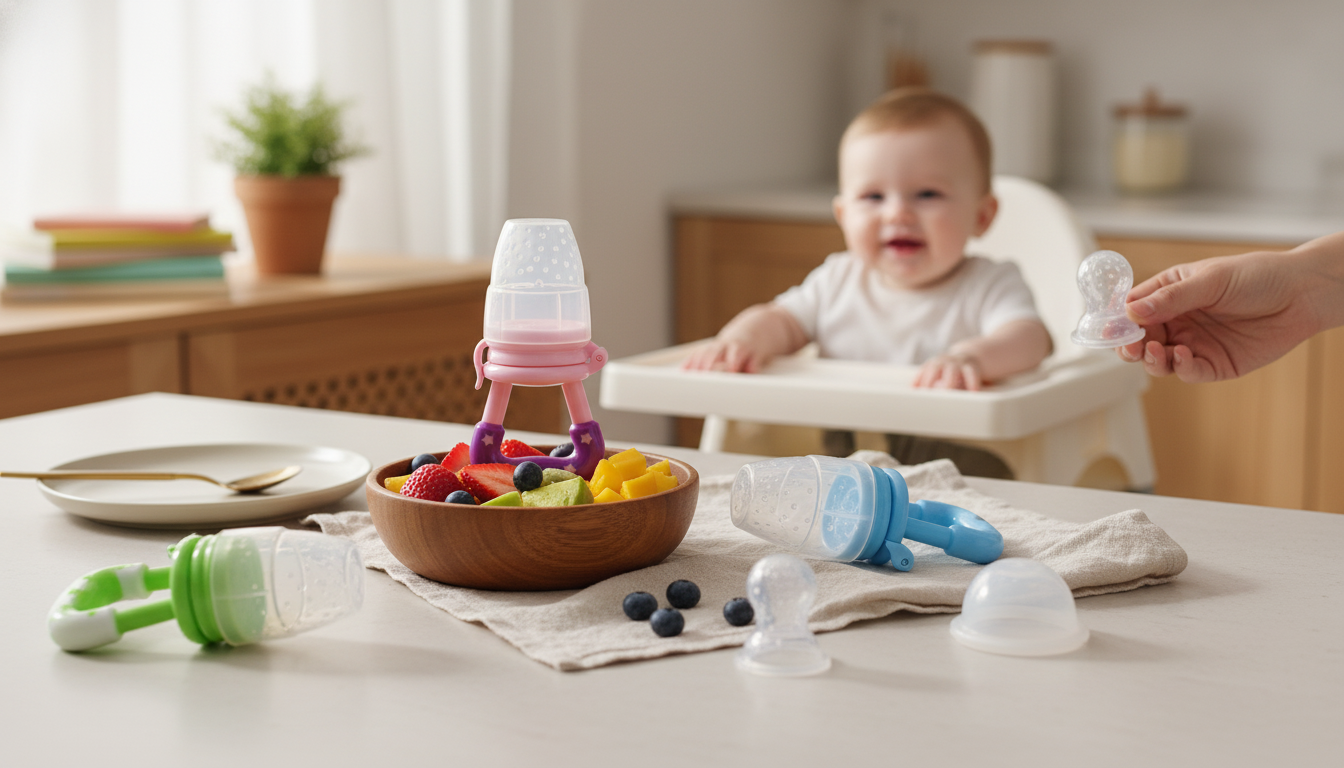
A silicone fruit feeder helps babies explore new flavors while reducing the risk of large pieces breaking off in the mouth. This 5-piece set with covers is designed for early self-feeding, cold fruit for teething comfort, and easy cleanup—useful for quick snacks at home or on the go. For more guidance, see Perspective: Novel Commercial Packaging and Devices for … – PMC.
What a silicone fruit feeder does
A silicone fruit feeder is a simple tool with a soft, perforated pouch that holds food while letting only small amounts pass through. For babies who are new to solids, it can make “first tastes” feel more manageable for both baby and caregiver. For further reading, see Ola Baby – Silicone Fresh Fruit Feeder & Popsicle Set for Solid Food ….
- Holds soft foods (like ripe fruit) inside a perforated silicone pouch so only small amounts pass through.
- Supports early self-feeding practice with a handle babies can grip.
- Can be used with chilled foods to soothe sore gums during teething.
- A cover helps keep the pouch clean between uses (diaper bag, stroller, travel).
For broader feeding readiness and safety guidance, review recommendations from HealthyChildren.org (American Academy of Pediatrics) and the CDC infant and toddler nutrition pages.
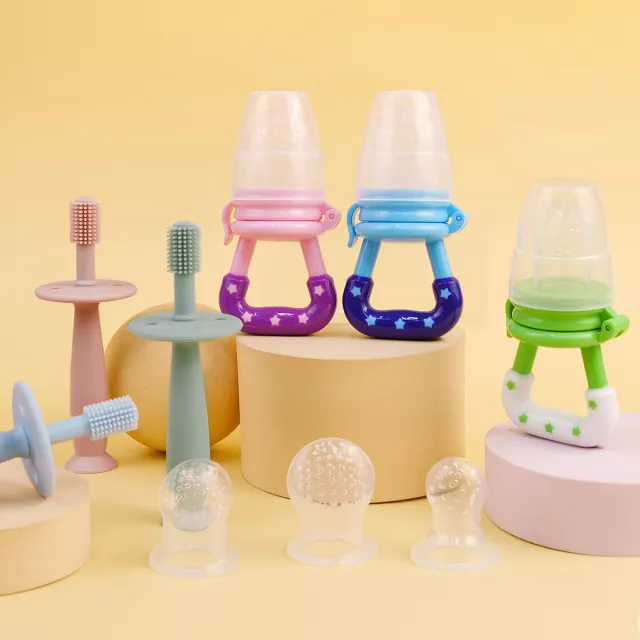
What’s included in a 5-piece set with covers
Having multiple feeders is less about “more stuff” and more about keeping daily routines smooth. With several units, one can be in use, one can be drying, and another can be prepped and chilled for later—especially helpful during teething phases when a cold snack is a frequent request.
- Multiple feeders make it easier to rotate during the day (one in use, one cooling, one being washed).
- Covers help reduce mess and contact with surfaces when stored.
- A set approach is helpful for families who prep snacks ahead of time or want a backup for daycare.
Typical set components and why they help
| Item |
Purpose |
Everyday benefit |
| Silicone feeder (handle + pouch) |
Allows tiny portions of food to pass through |
Less worry about large chunks; encourages self-feeding |
| Protective cover/cap |
Keeps pouch protected when not in use |
More hygienic storage in bags and drawers |
| Multiple units |
Rotation across meals and cleaning cycles |
Less rushing to wash immediately; convenient for travel |
How to use it safely (step-by-step)
Even with a feeder, safe feeding habits matter. A feeder can reduce risk from large pieces, but it doesn’t replace close supervision or appropriate food choices.
- Wash all parts before first use; check that the pouch is fully seated and secured before offering it.
- Start with very soft foods (ripe banana, steamed apple/pear, avocado) to reduce clogging and frustration.
- Use small portions; overfilling can make it harder for babies to get food through the openings.
- Offer only when an adult is supervising and the baby is sitting upright.
- Inspect the silicone for tears, thinning, or damage; replace parts that show wear.
If you ever need a refresher on choking prevention and first aid basics, consult an authoritative resource such as the NHS guidance on choking (and consider taking an infant first-aid class locally).
Best foods to put inside (and what to avoid)
The best results come from foods that are soft, easy to mash, and release flavor with gentle chewing or sucking. If a food stays firm, turns slippery into a solid “plug,” or is very sticky, it tends to be frustrating and harder to clean.
- Great options: ripe berries (slightly mashed), banana, melon, steamed carrot, steamed apple/pear, soft mango, avocado, yogurt frozen into small pieces (if appropriate for baby), breastmilk/formula ice cubes for teething comfort (as advised by a pediatrician).
- For teething: chilled (not rock-hard) fruit can be soothing; avoid anything that becomes a hard, slick lump.
- Avoid: whole grapes, nuts, hard raw apple chunks, popcorn, chunks of sausage/hot dog, or any food that remains firm and could break into larger pieces.
- Skip sticky foods that can gum up openings and are difficult to clean thoroughly.
Cleaning and hygiene routine
Because residue can hide in perforations and seams, a consistent cleaning routine is the difference between a feeder you love and one that develops stubborn odors. Cleaning promptly is usually faster than scrubbing dried-on fruit later.
Quick cleaning checklist by situation
| Situation |
What to do |
Why it matters |
| After fruit snack |
Rinse immediately, then wash with soap and brush |
Prevents sticky residue and odor |
| After yogurt/puree |
Soak briefly, brush openings, rinse thoroughly |
Reduces buildup in perforations |
| Dropped outdoors |
Wash and sanitize before next use |
Cuts down on germ exposure |
| After illness |
Sanitize more frequently and keep separate |
Helps limit reinfection in the household |
How to choose the right fruit feeder set
Common mistakes and quick fixes
FAQ
Is silicone feeder good for babies?
It can be a helpful tool for controlled small tastes, early self-feeding practice, and teething comfort when used correctly. Always supervise, keep baby upright, choose soft foods, inspect for wear, and clean thoroughly between uses.
What age can a baby use a silicone feeder?
Many families introduce one once a baby is showing readiness for solids—such as sitting with support and following a pediatrician’s guidance for starting complementary foods. Timing varies, so match use to your baby’s readiness and your clinician’s recommendations.
Are baby fruit feeders worth it?
They’re often most useful for teething periods, cautious “first tastes,” and for babies who enjoy self-feeding but aren’t ready for many textures yet. They still require supervision and aren’t a substitute for learning to handle different safe textures as baby progresses.
Recommended for you










Leave a comment